**How to Read Skincare Labels Like a Pro: A Luxury Guide to Ingredients and Formulation**
Understanding skincare labels brings clarity to the rituals we create for our skin. By learning to recognise ingredients, formulation principles, and purposeful details, we can choose nourishment with greater confidence, support long term skin balance, and approach daily care as an informed, restorative practice. Whether you are comparing moisturizers, choosing a serum, or building a routine for pigmentation, sensitivity, dehydration, or urban skin stress, the label offers valuable insight. It reveals what a product contains, how it may work, and whether it complements your needs. Reading it well transforms skincare from impulse into intention.
**Why Reading Skincare Labels Matters**
A beautiful package can create an immediate impression, but the ingredient list tells a more meaningful story. Skincare labels help you distinguish between a product created with thoughtful formulation and one relying primarily on trend driven language.
For modern consumers, this distinction matters. Skin is exposed to heat, humidity, pollution, air conditioning, stress, and inconsistent sleep. In India, changing seasons can mean intense ultraviolet exposure in one month and dryness or sensitivity in another. Urban environments may also leave skin feeling congested, dull, dehydrated, or reactive.
A well chosen skincare product can support the skin barrier, improve the appearance of uneven tone, replenish moisture, and refine the overall texture of the complexion. However, the most effective routine is rarely the one with the longest ingredient list. It is the one that combines suitable ingredients, intelligent concentrations, a stable formula, and consistency.
**Start With the INCI Ingredient List**
INCI stands for International Nomenclature of Cosmetic Ingredients. It is the standard naming system used on skincare labels around the world.
Ingredients are generally listed in descending order of concentration. Those present in the greatest amount appear first, followed by ingredients used in smaller quantities. This gives you a useful sense of the product’s foundation.
The first several ingredients often include water, hydrosols, aloe vera, glycerin, oils, or other solvents and moisturising agents. This does not mean the ingredients listed lower down are unimportant. Some highly effective ingredients are used at low concentrations, particularly actives such as retinoids, peptides, antioxidants, and certain forms of vitamin C.
Once an ingredient falls below approximately one percent, brands may have more flexibility in the order of listing. Preservatives, fragrance components, colourants, and some active ingredients may therefore appear towards the end, even when they are purposeful parts of the formula.
The key is not to judge one ingredient in isolation. A skincare product should be understood as a complete formulation.
**Learn the Difference Between Ingredient Families**
Reading labels becomes easier when you recognise the main categories of skincare ingredients. Each has a different role in supporting the skin.
**Humectants for Dehydrated Skin**
Humectants attract water and help the skin maintain a more hydrated appearance. Common examples include glycerin, hyaluronic acid, sodium hyaluronate, aloe vera, panthenol, and beta glucan.
Hyaluronic acid is often discussed as though it were a single ingredient, but its molecular weight can influence how it behaves in a formula. Different forms may offer hydration at different levels of the skin’s surface. Glycerin, meanwhile, is a classic and highly reliable humectant that can feel comfortable across many skin types.
If your skin feels tight after cleansing or appears dull despite using rich creams, humectant based products may be beneficial. A serum containing these ingredients is often best followed with a moisturizer to help support lasting comfort.
**Emollients for Smoothness and Softness**
Emollients help soften and smooth the skin by filling spaces between surface cells. They can make the complexion feel supple and refined.
Look for ingredients such as squalane, jojoba oil, rosehip oil, shea butter, caprylic or capric triglyceride, and selected botanical oils. Premium oils are not automatically better simply because they are rare or expensive. Their quality, stability, extraction method, and compatibility with the rest of the formula all matter.
For combination or blemish prone skin, lighter emollients may feel more comfortable. Drier skin may prefer a richer moisturizer that combines emollients with barrier supporting ingredients.
**Occlusives for Barrier Support**
Occlusives help reduce water loss from the skin’s surface. They can be especially useful for dry, sensitised, or compromised skin.
Ingredients such as squalane, plant derived waxes, dimethicone, petrolatum, and certain butters may perform this role. Occlusives are not inherently heavy or unsuitable for all skin types. The right choice depends on the texture of the formula and the condition of your skin.
A sophisticated moisturizer often combines humectants, emollients, and occlusives in carefully considered proportions. This balance is more meaningful than choosing a product based on one hero ingredient alone.
**Barrier Supporting Ingredients**
The skin barrier helps protect against environmental stressors while reducing unnecessary moisture loss. When it is compromised, skin may feel irritated, rough, tight, or unusually reactive.
Ceramides, cholesterol, fatty acids, panthenol, allantoin, beta glucan, and colloidal oatmeal are commonly associated with barrier focused formulations. Niacinamide may also support the appearance of a balanced barrier while helping improve the look of uneven tone and excess oil.
Barrier care is particularly relevant when using active ingredients, travelling frequently, living in a polluted city, or experiencing seasonal changes. A beautifully designed routine should not only pursue visible results. It should also preserve comfort and resilience.
**Understand Popular Skincare Actives**
Active ingredients are selected to address specific concerns, but their effectiveness depends on concentration, stability, pH, delivery system, and regular use.
**Vitamin C for Radiance and Uneven Tone**
Vitamin C is valued for its antioxidant properties and its ability to support a brighter, more even looking complexion. L ascorbic acid is a well researched form, but it can be sensitive to light, air, and water. Other derivatives may offer greater stability and a more comfortable experience for some skin types.
When reading a vitamin C label, consider the form of vitamin C, the packaging, and whether the formula includes complementary antioxidants. A dark or opaque container may help protect sensitive ingredients from light exposure.
**Niacinamide for Balance and Clarity**
Niacinamide is a versatile form of vitamin B3. It is commonly used in formulations designed to support the appearance of uneven tone, excess oil, enlarged looking pores, and a weakened skin barrier.
A higher percentage is not always necessary. Some skin types respond beautifully to a moderate concentration, while very high percentages may feel uncomfortable for sensitive skin. Formulation quality and personal tolerance remain important.
**Retinoids for Texture and Signs of Skin Ageing**
Retinoids are among the most studied cosmetic ingredients for improving the appearance of fine lines, uneven texture, and blemishes. They can also be stimulating, particularly when introduced too quickly.
Read the label carefully to identify the specific retinoid used. Follow the brand’s instructions, begin gradually, and use broad spectrum sunscreen during the day. Those who are pregnant or breastfeeding should consult a qualified medical professional before using retinoid products.
**Alpha Hydroxy Acids and Beta Hydroxy Acids**
Alpha hydroxy acids, including glycolic acid, lactic acid, and mandelic acid, help exfoliate the surface of the skin. They may be useful for dullness, uneven texture, and the appearance of discolouration.
Salicylic acid is a beta hydroxy acid often chosen for oily or blemish prone skin because of its affinity for oil. Both categories can be valuable, but overuse may contribute to dryness or irritation.
If your routine already includes exfoliating acids, retinoids, or strong treatments, introducing several active products at once may make it difficult to understand what your skin actually needs.
**Peptides and Antioxidants**
Peptides are short chains of amino acids used in formulations designed to support the look of firmer, smoother skin. Their function depends on the specific peptide and the wider formula.
Antioxidants such as vitamin E, ferulic acid, green tea, resveratrol, and coenzyme Q10 help defend a formula and the skin from oxidative stress associated with environmental exposure. They are especially appealing in routines created for city living, although no cosmetic ingredient replaces sunscreen or a healthy lifestyle.
**Why Formulation Quality Matters More Than Hype**
An ingredient may sound impressive on a label and still offer limited value if the formula is unstable, poorly preserved, uncomfortable, or unsuitable for the skin.
A well formulated product considers several elements at once. These include ingredient compatibility, pH, texture, absorption, preservation, packaging, stability, and the overall experience of use.
For example, a serum containing a delicate antioxidant should be protected from excessive exposure to air and light. An exfoliating product should be balanced to provide its intended function without unnecessarily compromising comfort. A moisturizer should feel elegant on the skin while delivering meaningful hydration and barrier support.
This is where thoughtful luxury skincare distinguishes itself. Luxury is not merely visual. It is found in the quality of the ingredients, the precision of the formulation, the feel of the texture, and the confidence created through consistent use.
**Do Not Be Distracted by Front Label Claims**
The front of a package is designed to communicate quickly. It may highlight words such as brightening, clean, natural, intensive, botanical, or dermatologist tested. These terms can be useful, but they require context.
Natural does not automatically mean gentle, just as synthetic does not automatically mean harsh. Botanical ingredients can be beautifully effective, but some fragrant plant extracts may be unsuitable for reactive skin. Clean beauty has no single universal definition, so it is wise to read the full ingredient list rather than rely on a front label promise.
The most meaningful questions are practical. What is the product designed to do? Which ingredients support that purpose? Is the formula suitable for your skin type? Does the packaging protect the contents? Can you use it consistently?
**Read the Label in the Context of Your Skin**
The same ingredient can feel different depending on your skin’s condition, climate, and existing routine.
If your skin is dry, look for humectants, ceramides, nourishing oils, and comfortable occlusives. If your skin is oily or combination, consider lightweight hydration, niacinamide, gentle exfoliation, and non heavy textures. If your skin is sensitive, prioritise a short, supportive routine and be cautious with fragrance, essential oils, and multiple high intensity actives.
For pigmentation and dullness, ingredients such as vitamin C, niacinamide, azelaic acid, gentle exfoliating acids, and retinoids may be considered depending on individual needs. Daily sunscreen remains essential, particularly in India’s strong sunlight and urban environments.
Stress and screen exposure also deserve perspective. Long working hours, poor sleep, and sustained stress can influence the way skin looks and feels. Screens are not the sole cause of every skin concern, but modern habits often coincide with fatigue, dehydration, indoor air conditioning, and irregular routines. Skincare works best as part of a wider philosophy of restoration.
**How Nagetive Approaches Modern Luxury Skincare**
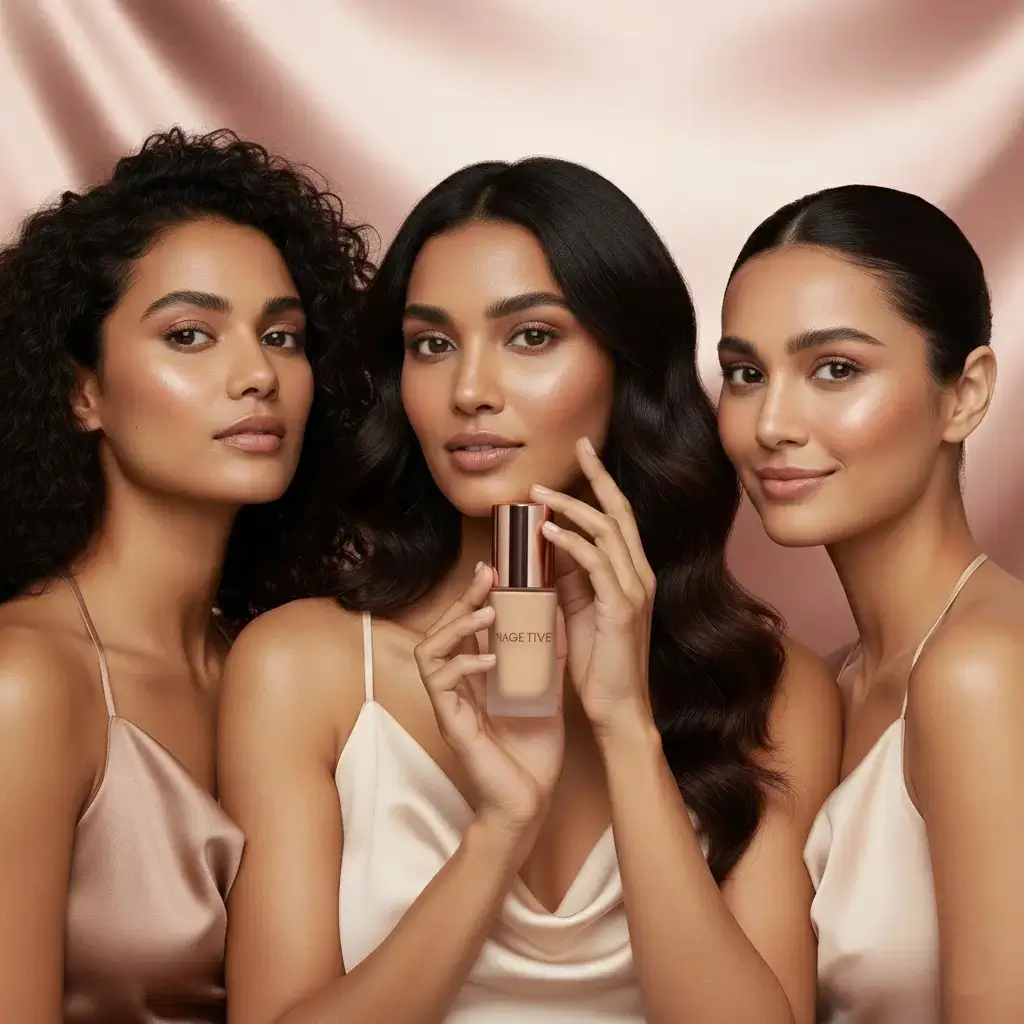
Nagetive is created for those who see skincare as both science and ritual. The brand’s ingredient forward philosophy reflects a desire for premium quality, purposeful formulations, and products that fit naturally into real routines.
Rather than encouraging complexity for its own sake, Nagetive represents a considered approach to modern luxury skincare. Each product can be understood as part of a wider ritual, whether you are beginning with a gentle cleanse, layering a serum, supporting the skin with a moisturizer, or refining your routine with carefully selected actives.
This perspective is especially relevant for urban skin. The goal is not to overwhelm the complexion, but to give it intelligent support through textures, ingredients, and rituals that feel both effective and pleasurable.
**A More Informed Way to Choose Skincare**
Reading a skincare label like a professional does not require memorising every ingredient. It requires curiosity and context.
Look beyond the hero claim. Read the first several ingredients. Identify the active ingredients and their purpose. Consider whether the formula addresses your actual concern. Pay attention to packaging, texture, fragrance, and how your skin responds over time.
Introduce new products gradually and patch test when appropriate. If you have persistent irritation, severe acne, or a medical skin condition, seek advice from a qualified dermatologist.
The most beautiful skincare routine is not necessarily the most elaborate. It is the one that feels intentional, supports the skin’s natural balance, and remains effortless enough to become part of everyday life.
With premium ingredients, refined textures, and a thoughtful approach to modern skin needs, Nagetive turns daily care into an elevated ritual. This is skincare designed not simply to sit on the vanity, but to belong to the life you lead.
Luxury is found in the details you understand, the ingredients you trust, and the feeling of skin cared for with intention. With Nagetive’s premium skincare range, upgrading your routine becomes more than choosing a product. It becomes choosing a more considered relationship with your skin.




 on social media.